

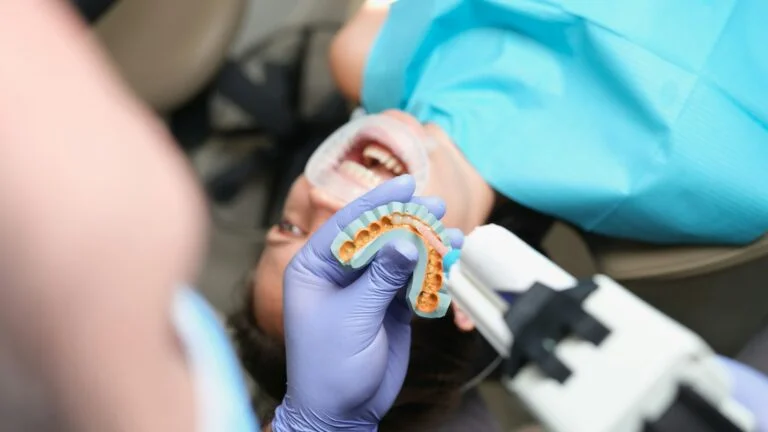
Starting Invisalign in Cranborne can seem like a big step, especially if you’re not quite sure what to expect. For many, it’s a way to straighten teeth more discreetly, without wearing fixed braces. With summer coming up, this could be a good time to ask the right questions and think through how the process might fit into your schedule.
Knowing what to expect early on can help keep things clear and less stressful. Before beginning, it helps to think not just about how your smile might change, but how the treatment fits around work, school, meals, and even travel. Planning ahead now means it could be easier to stay on track once your aligners are in place.
What Does the Full Invisalign Journey Look Like?
Before starting, it helps to map out the full Invisalign process so nothing feels rushed or surprising. Aligner treatment usually begins with a digital scan, which then guides how your personalised trays are made. Each set of trays moves your teeth slightly more until they reach the final position.
- Ask about how frequently you’ll need to check in. Some appointments might be in-person, but others may be possible remotely if your case allows.
- Find out what kind of progress markers you should look out for. This gives you more confidence that things are going according to plan.
- Confirm how long the full process is expected to take. Everyone’s timing varies, so it’s worth checking at the start.
The path to straighter teeth doesn’t always move in a straight line, so having a schedule laid out can help you know what’s coming next.
Our Invisalign process at Alaska House Dental Practice uses digital scanning to build a customised treatment plan, helping you avoid traditional dental impressions for a smoother start.
Is Invisalign Right for My Teeth and Gums?
Clear aligners have their limits, and they might not be right for every smile. The first thing to talk about is your current dental health. Healthy gums and a clean set of teeth usually make the best starting point.
- Check if any dental work might be needed before aligners can be used properly, like gum treatment or filling in worn areas.
- Ask which types of problems can actually be improved with Invisalign trays, such as crowded teeth or mild gaps.
- Make sure your goals match what’s realistic. Aligners can shift teeth, but they won’t fix every dental issue.
Being clear on where you stand at the beginning often helps avoid slowdowns later on.
We offer private-only Invisalign treatment in a friendly setting, making it easy to ask questions or pause treatment if other dental needs come up along the way.
How Will Invisalign Fit Into My Day-to-Day Life?
Adjusting to wearing aligners means thinking through your daily habits. Things like work hours, school breaks, and social routines can all play a part in how easy it is to stick to the plan.
- Ask how many hours a day the aligners must be worn. Missing time here and there could slow progress or affect your results.
- Think about times when wearing the trays might be tricky, such as when playing contact sports or shift working at night.
- Ask for tips on looking after the aligners during meals or school hours, especially when you won’t be near a sink.
Making these parts easier from the start helps build the routine and makes treatment simpler to manage.
What Changes Should I Expect With Eating and Speaking?
Eating feels different when you’re using aligners, and speaking might too, at least for a short while. Since aligners must be removed to eat or drink most things, a few changes to your normal routine might be needed.
- Remove the trays every time you eat. Some people adjust easily, but it helps to know what mealtimes will look like.
- Ask how long it takes most people to get used to speaking with aligners. Some may notice a slight lisp at first, especially in the early stages.
- Double check whether drinks like tea, soda, or juice might stain or damage the trays. Many people choose to stick with water while trays are in.
These shifts in habit may feel a bit awkward at first, but most people settle in quickly once they’ve had some practice.
What Happens If My Teeth Don’t Move As Expected?
Sometimes teeth take longer to shift than first planned. Other times, they might not follow the shape predicted in the digital model. When that happens, it’s helpful to know what your options are.
- Ask what’s usually done if progress slows or teeth don’t stay on track. In some cases, an extra scan might be needed to adjust your plan.
- Talk about refinements, which are extra sets of aligners that help finish the job if another round is needed.
- Find out if you will need to wear retainers after you’re done and how long for. While nighttime retainers are common, some may need fixed ones that stay behind the teeth.
Knowing these details early avoids surprises and helps make the full process feel more steady and manageable.
We guide you from the first scan to your last tray, and offer support if teeth need extra adjustments or refinements along the way.
Feeling Clear and Confident About Your Smile Plan
Starting Invisalign in Cranborne is about more than just straightening teeth. It’s about building a plan that fits your life and makes each phase feel doable. When you ask the right questions early, the rest doesn’t feel so uncertain.
A smoother experience comes from knowing what to expect. From the moment the first tray is fitted to care after the last, being prepared helps you feel more at home in the process. And that confidence helps every step feel a little easier.
Wondering whether clear aligners could be the best fit for your smile? We’re here to guide you through what to expect and how long the process may take, especially when it comes to something as personal as teeth straightening. Our team at Alaska House Dental Practice is always happy to answer your questions and discuss what’s involved with Invisalign in Cranborne. Give us a call or send a message to get started on your treatment plan.